

Physical security guard training
Building a strong defence force. Seven core modules, three advanced modules, and assessment by drill rather than by certificate alone.
Why it matters
The first line of defence.
Physical security guards are the first line of defence for organisations, ensuring the safety of people, assets and infrastructure. Our training programmes focus on building situational awareness, technical skill and response capability.
A guard who has run the drill behaves differently in an incident from one who has only read the procedure. Every module below ends in a practical assessment.
Core syllabus
Seven core modules of guard training.
Taken in order. Each module is delivered in classroom and then on the ground.
-
- Understanding roles, responsibilities and ethics in security
- The importance of vigilance and professional demeanour
-
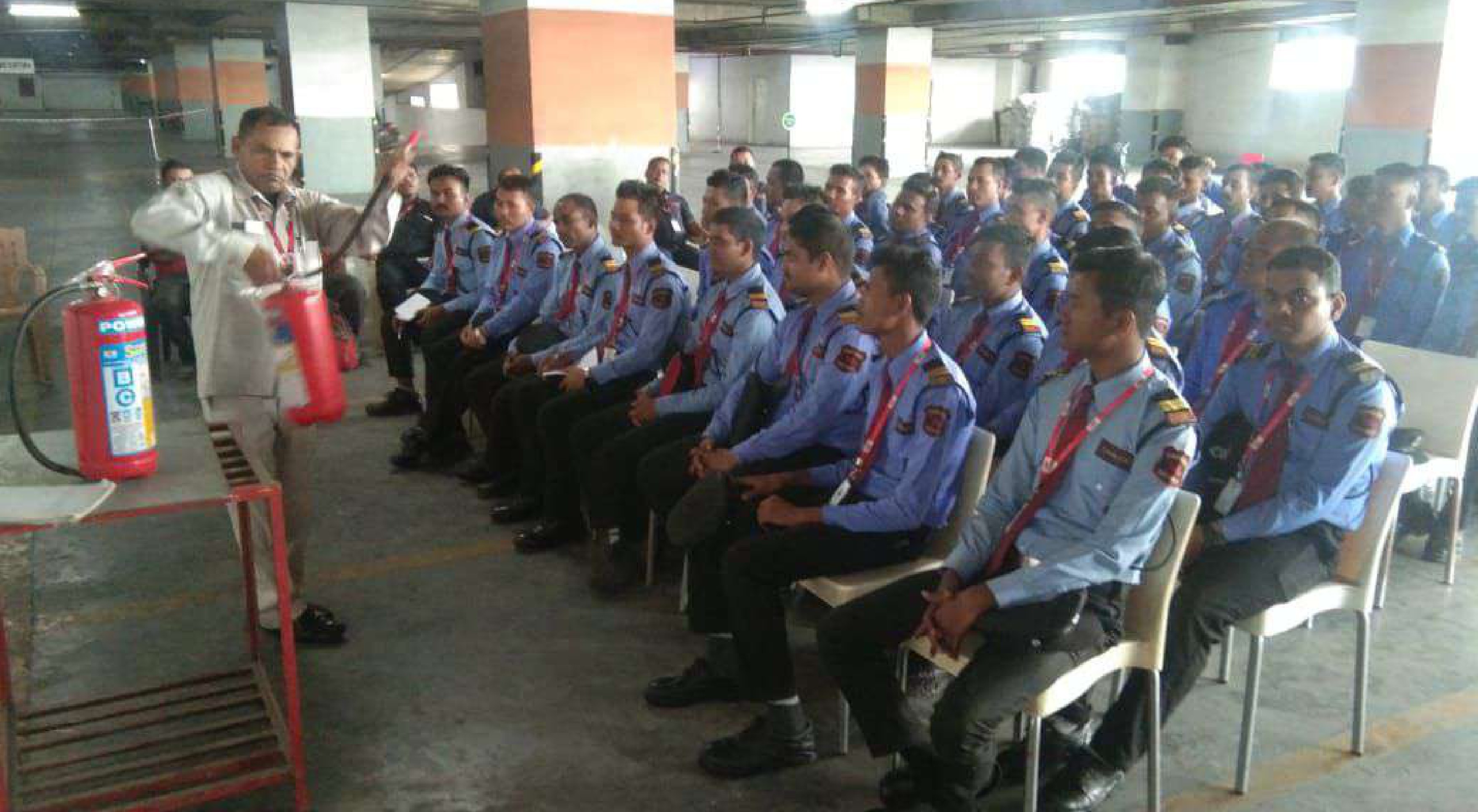
- Fire safety
- Identifying hazards, using fire extinguishers and evacuation protocols.
- Medical emergencies
- Basic first aid and CPR certification.
- Natural disasters
- Evacuation and crisis management strategies.
-
- Monitoring entry and exit points
- Effective use of CCTV systems and communication tools
- Verifying credentials and handling unauthorised access attempts
-
- Techniques to manage disputes without escalating tension
- Effective verbal and non-verbal communication skills
-
- Understanding local laws and regulations relating to security and detainment
- Respecting individual rights while enforcing rules
-
- Regular physical training to maintain agility and endurance
- Techniques to neutralise threats without excessive force
-
- Writing clear and concise incident reports
- Communicating effectively with law enforcement and emergency responders
Advanced syllabus
Three advanced modules.
Taken after the core syllabus, and matched to the post the guard will hold.
Use of security equipment
- Metal detectors, alarm systems and two-way radios
- Handling advanced tools such as drones and biometric systems
Threat identification and risk assessment
- Identifying suspicious behaviour and potential threats
- Assessing vulnerabilities in physical infrastructure
Specialised training
- VIP protection — escorting and safeguarding high-profile individuals
- Event security — managing large crowds and high-pressure situations
- Transport security — protecting cash, goods and sensitive items in transit
Soft skills
The part clients notice daily.
Most of a guard’s shift is interaction, not incident. These are trained and assessed like any other module.
- Customer service. Maintaining a friendly yet authoritative presence.
- Stress management. Remaining calm under pressure.
- Cultural sensitivity. Respect for diversity in public interactions.
Certification and evaluation
Proven, not assumed.
Skill is verified before deployment and re-verified on a cycle.
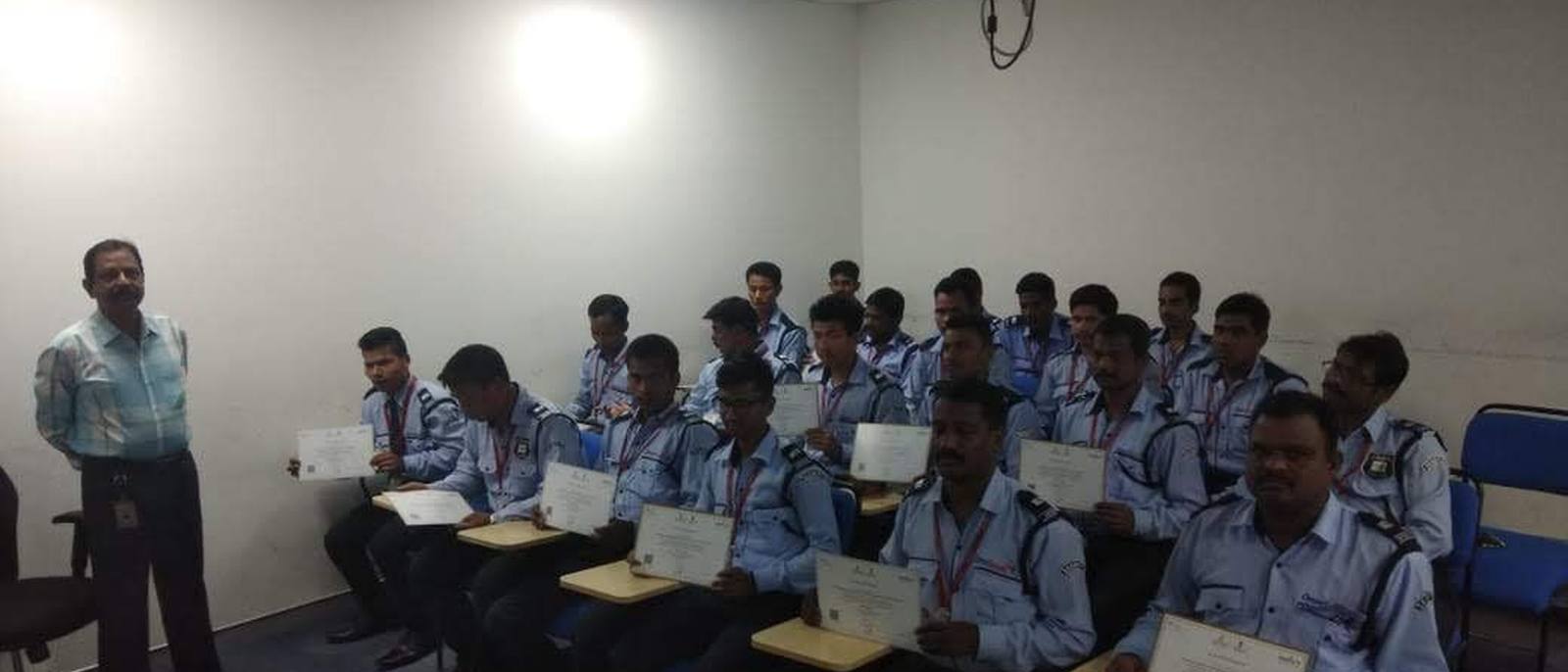
- Certifications. Accredited programmes ensure guards meet industry standards.
- Drills and assessments. Simulated scenarios evaluate practical skill and readiness.
Benefits
What well-trained guards change.
Enhanced safety
Incidents prevented proactively, and risk reduced rather than reported.
Professionalism
Builds trust among employees, visitors and clients from the first interaction.
Operational efficiency
Security operations managed effectively, with fewer escalations reaching your desk.
Investing in thorough and continuous training ensures security guards are not just protectors but ambassadors of organisational safety and professionalism.
Next step
Training for your own security team?
We deliver these modules for in-house teams as well as our own. See the sector-specific programmes, or ask for a syllabus.